Written by William Bridge, Chief Technology Officer at Nucleon Energy
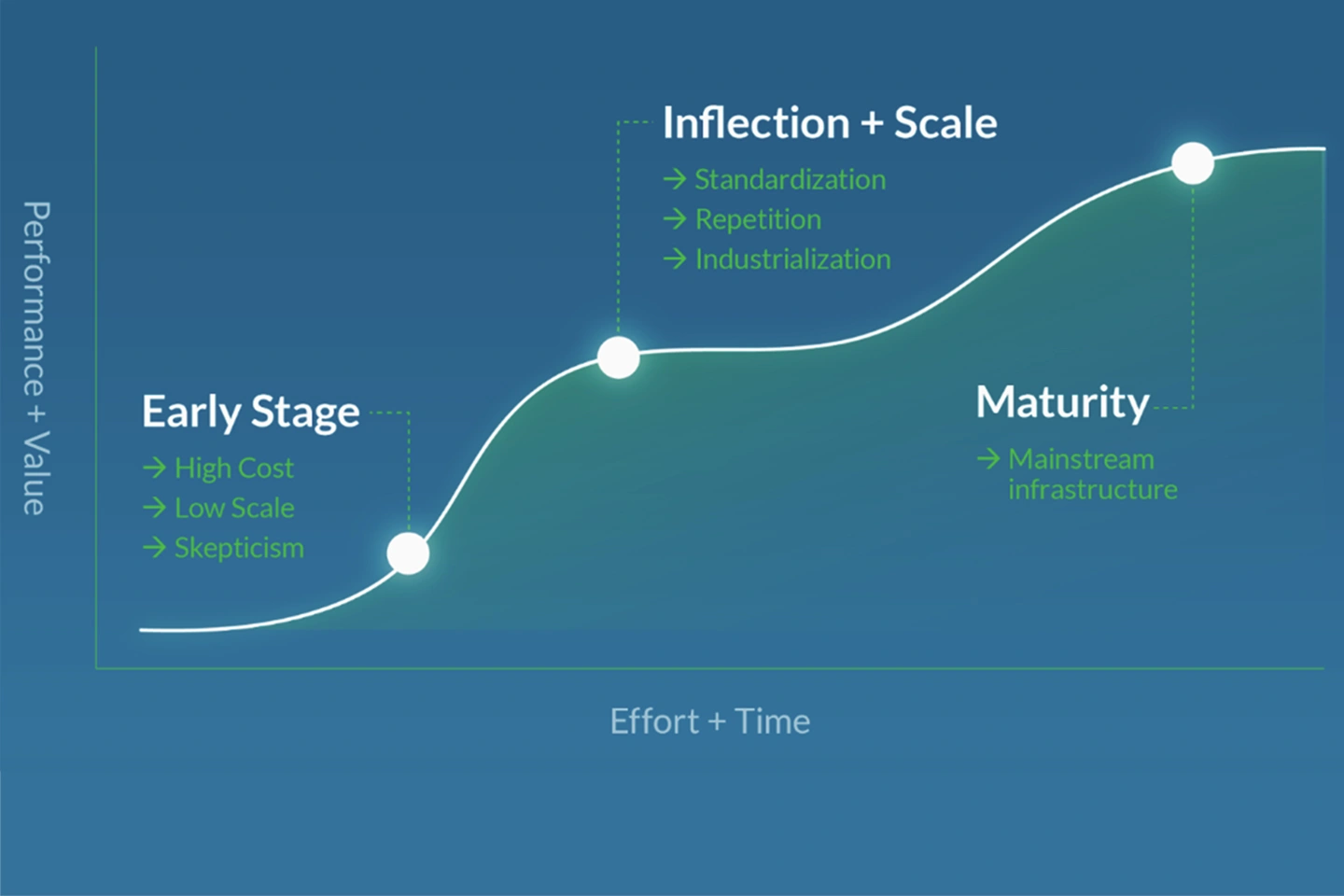
Then, something quietly but decisively changes. Scale arrives, learning compounds, and costs fall. Performance improves. The technology moves onto the steep part of the S-curve—and suddenly yesterday’s impossibility becomes today’s obvious choice.
Coal did this first. Early coal power was dirty, inefficient, and localized. Standardized boilers, rail logistics, and scale turned it into the backbone of industrial civilization. Natural gas followed. Early gas plants were niche and costly, but combined-cycle turbines and global LNG infrastructure made gas cheap, flexible, and wildly profitable. Wind and solar repeated the pattern more recently. Both were once dismissed as boutique solutions that would never compete with “real” baseload power.
The historical record is blunt about how wrong that skepticism was.
In the early 2000s, solar photovoltaic (PV) technology was widely regarded as expensive and still in the early stages of deployment, often relying on policy support and incentives to grow beyond niche markets. At that time, wholesale module prices hovered around $3.50–$4.00 per watt—far higher than typical fossil fuel generation costs and grid parity thresholds and installations were often supported by subsidies to make projects financially viable. Analysts and industry observers regularly noted that PV remained much more costly than conventional generation and that large-scale deployment depended on continued cost declines and supportive policy frameworks. Between 1981 and 2000, global solar capacity expanded relatively slowly and while growth was significant, it did not resemble the explosive scale-ups seen after 2010.
Once manufacturing scaled, global capacity multiplied rapidly and module prices collapsed—falling roughly 90% between 2010 and 2023 as cumulative production increased, supply chains matured, and learning effects kicked in. Today, utility-scale solar PV often produces some of the lowest-cost electricity in the world, a shift driven not by a change in physics, but by economics and industrialization following a classic S-curve.
Small Modular Reactors (SMRs) are now sitting at the same inflection point solar occupied in the early 2000s.
For decades, nuclear energy lived on the wrong side of the curve. Custom-built gigawatt plants, site-specific engineering, long construction timelines, and regulatory uncertainty created a cost structure that punished capital and rewarded delay. Traditional nuclear never benefited from repetition or true industrialization. Each plant was effectively a bespoke megaproject.
SMRs invert that model.
They are smaller, standardized, factory-manufactured, and designed for repeat deployment. That matters more than any single technical feature. Cost declines do not come primarily from clever physics. They come from doing the same thing over and over again, learning each time, and spreading fixed costs across volume. This is the same mechanism that transformed gas turbines, wind towers, and solar modules from novelties into infrastructure.
The early SMR projects are expensive for the same reason early solar was expensive: first-of-a-kind engineering, immature supply chains, conservative financing, and regulatory processes designed for a different era. None of those are permanent conditions. All of them improve with deployment.
Once production shifts from construction sites to factories, once regulators license designs rather than one-off plants, and once operators can point to fleets instead of prototypes, the curve steepens. Then, capital costs fall, build times compress, risk premiums shrink, and returns improve.
This is why the question is no longer whether SMRs will become cost-effective, but when they cross the threshold that solar crossed a decade ago—when the debate quietly ends because the numbers speak for themselves.
History is unkind to people who declare that a technology “will never be economic.” Those statements age poorly because they mistake a moment on the curve for the destination. Energy transitions are not ideological arguments; they are industrial processes governed by scale, learning, and time.
SMRs are not exempt from that logic. They are finally aligned with it.
The S-curve comes for everyone. Nuclear included.
Written by Ryan Tourigny, Chief Development Officer at Nucleon Energy
For communities, exploring the siting of a Small Modular Reactor (SMR) is not just an infrastructure discussion. It raises practical questions about land and water, safety and stewardship, employment and economic opportunity, and what a decision today could mean decades, or even a century, into the future. These are reasonable questions, and they deserve clear, accurate information.
SMRs are often discussed in technical or policy terms. The purpose of this article is to provide a straightforward, community-level overview of what SMRs are, why communities may be asked to consider them, the unique benefits projects can offer, and the kinds of concerns and potential impacts that are commonly evaluated along the way.
Intended Audience: Community members who have heard about siting engagement in their community and have low-to-no understanding at this time of what an SMR is and how it will impact their community. They are doing initial research to learn more—perhaps prior to, or following, a community engagement session.
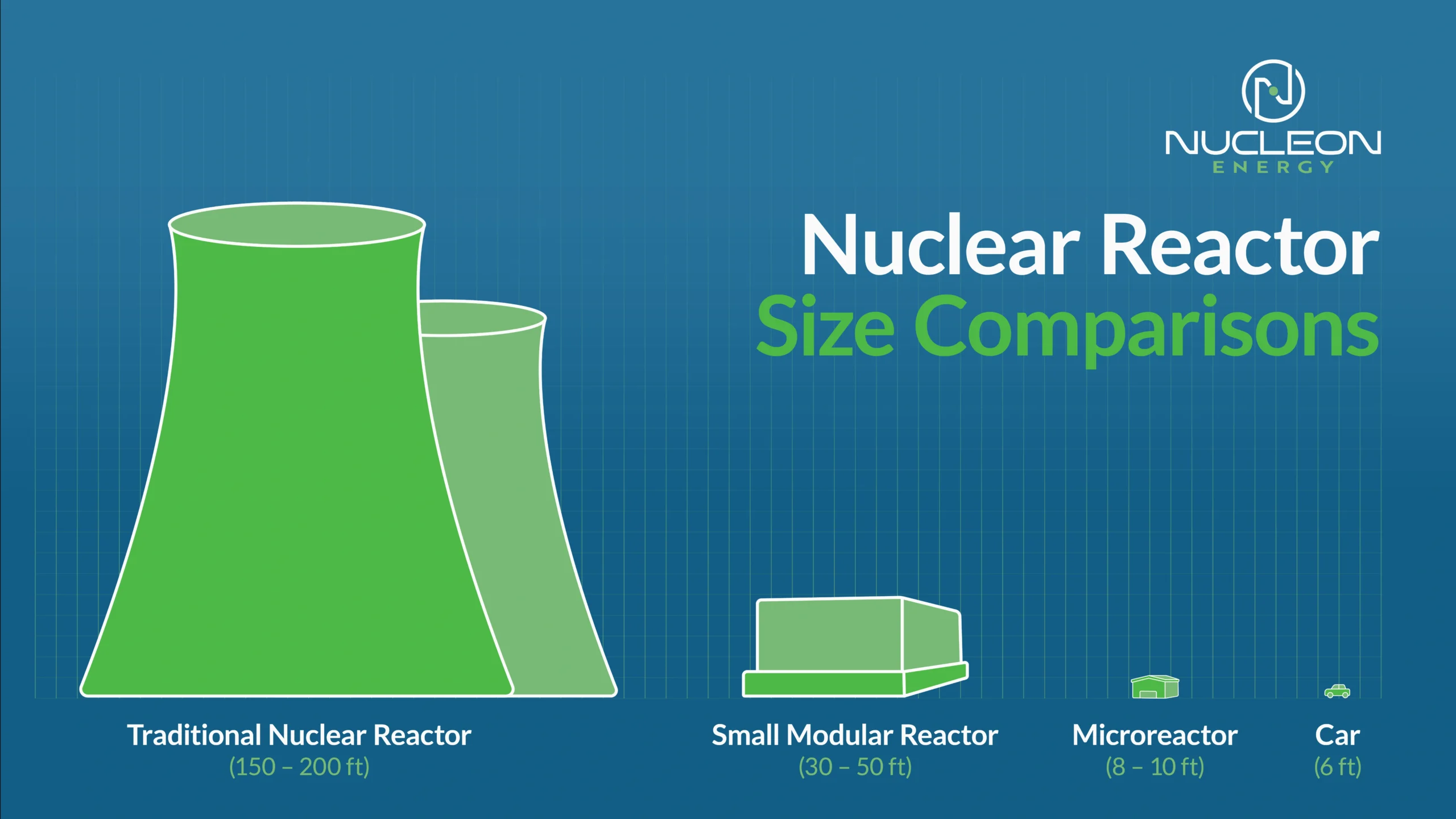
While conventional reactors are large, custom-built facilities designed to generate very high levels of power, SMRs are more compact and modular in design, meaning their components can be manufactured in a factory setting, with high quality and predictability, to be combined with other components on site.
This difference in scale and design leads to several practical distinctions. SMRs are intended to be easier to site, quicker to deploy, and more flexible in how they are used within an energy system. Modern designs also incorporate passive safety features, based on inherent features like gravity and natural circulation, rather than active systems with constant human intervention.
Importantly, SMRs are still subject to rigorous regulatory oversight and long-term planning, similar to other nuclear facilities, but are designed with a different approach to size, construction, and operation than traditional reactors. Given the repeatability of factory-made reactor designs, costs are expected to decrease each time a facility is deployed.
Reactor sizing comparison study, conducted by Nucleon Energy. Read full copy here.
At the same time, governments and utilities are working to reduce greenhouse gas emissions while maintaining affordability and system stability. Balancing these priorities has become a central challenge in long-term energy planning.
In response, a range of energy options are being evaluated for their ability to provide dependable, low-emissions power over decades. This includes nuclear energy.
For some regions, this broader planning exercise leads to early conversations with communities about potential SMR siting.These discussions typically focus on whether a project could be compatible with local land use, existing infrastructure, workforce capacity, and community priorities.
Being asked to explore SMR siting does not indicate that a decision has been made. Rather, it reflects an early-stage effort to understand whether a proposed approach aligns with the realities and values of the people who would live alongside it.
These conversations are shaped not only by technical considerations, but also by history, lived experience, and the understanding that energy infrastructure decisions can influence a community for generations.
Community concerns tend to fall into a few key areas, including:
Taken together, these questions reflect that communities are not simply evaluating a technology. They are considering how a long-term project could intersect with their land, governance structures and responsibilities to future generations.
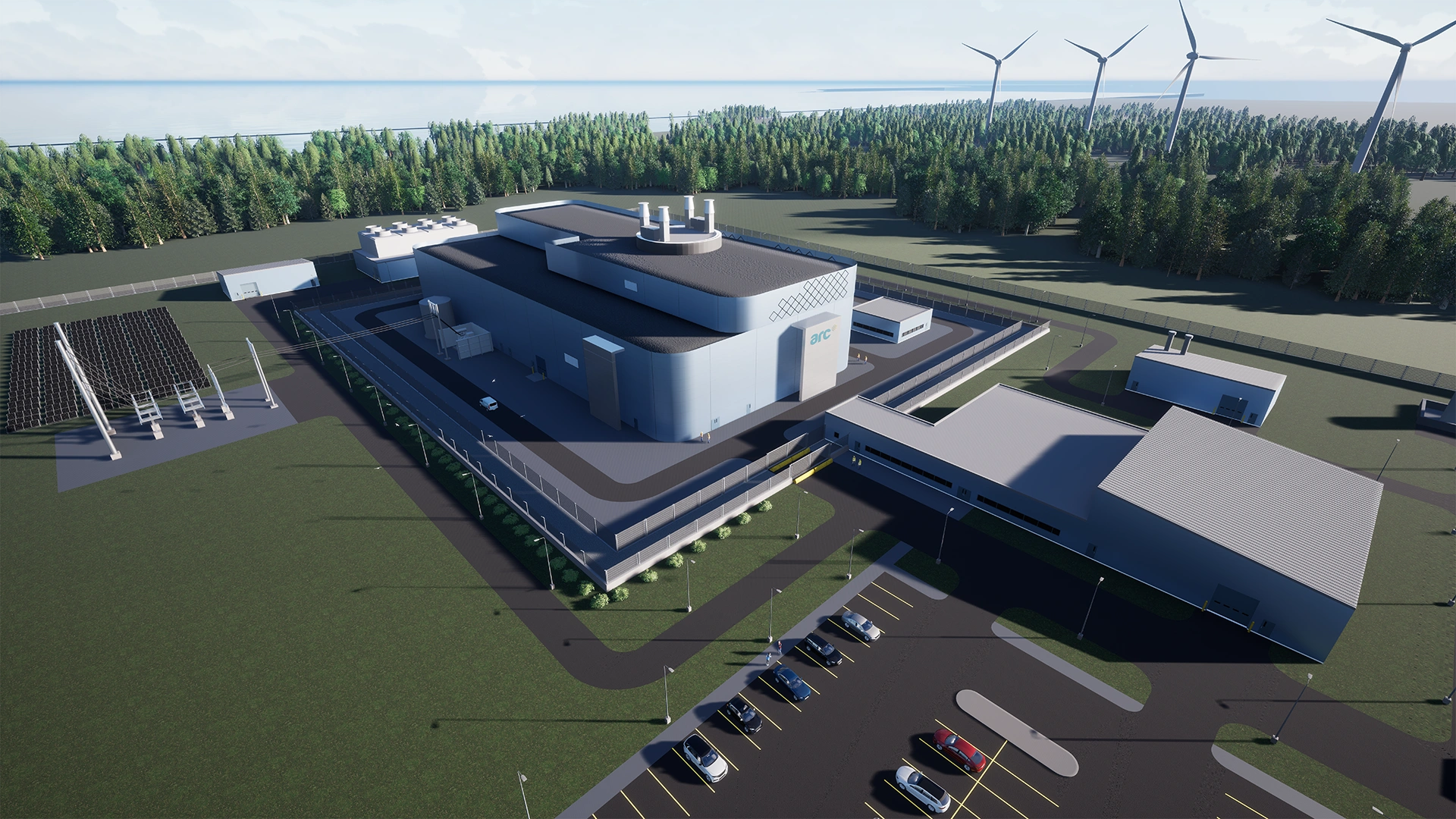
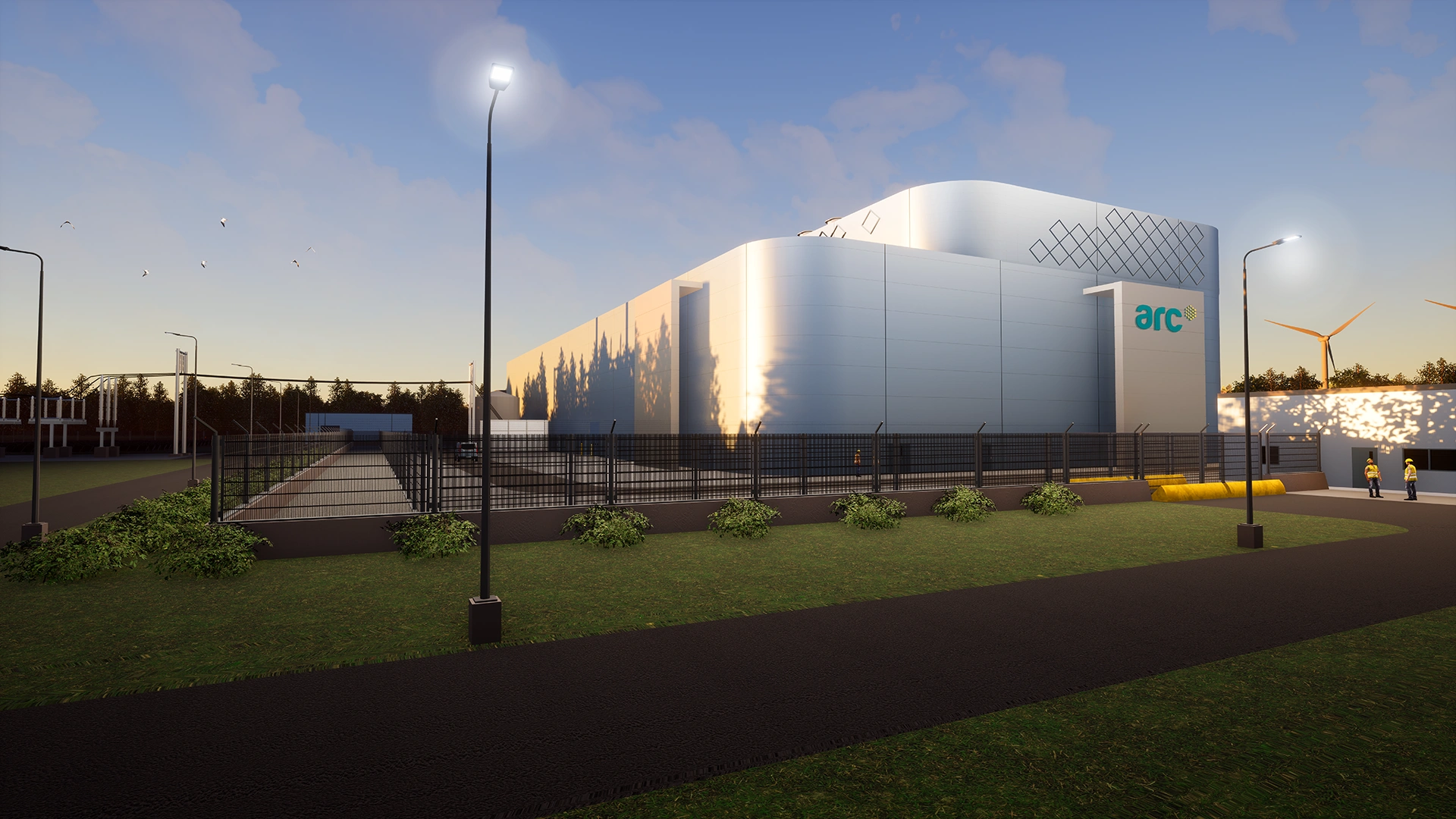
Rendering of the ARC100 Advanced Small Modular Reactor by ARC Clean Technology.
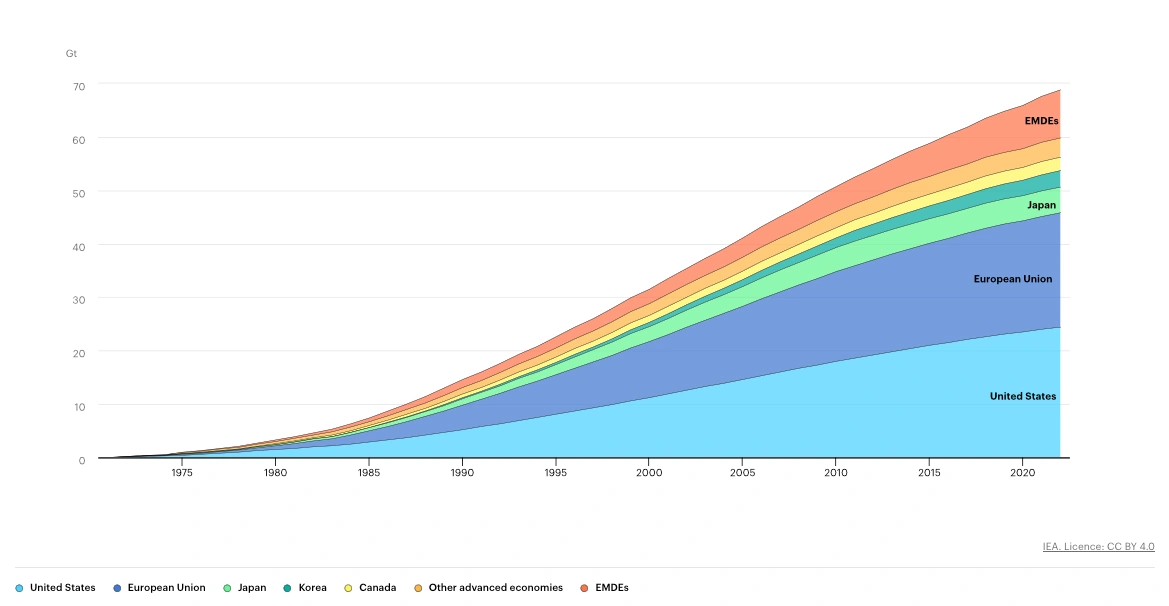
CO2 emissions avoided by nuclear by country or region, 1971-2022. Source: International Energy Agency.
Rendering of the ARC100 Advanced Small Modular Reactor by ARC Clean Technology
This early phase is focused on information-sharing and understanding local context, rather than seeking approval or commitment. Communities are generally asked to explore whether a project aligns with local priorities, land use considerations, and long-term goals before decisions advance further.
As discussions continue, engagement often becomes more structured. This may include community or individual stakeholders’ feedback on possible locations. Communities can expect a combination of informal conversations and formal processes, including environmental assessments and regulatory reviews. Participation usually extends over time, reflecting the long planning horizons associated with nuclear infrastructure. For Indigenous communities, engagement also intersects with established governance, rights, and stewardship responsibilities, and follows distinct processes and timelines.
When exploring the potential siting of an SMR, communities often find it helpful to identify the issues they want to understand early, before discussions advance or assumptions take hold.
While priorities will vary, communities commonly explore questions such as:
These questions are not intended to lead to a particular conclusion, but they can help your community clarify what matters most and ensure that discussions reflect local context, priorities, and long-term vision.
Ultimately communities need the tools and information to decide what is right for their members.
When an SMR is being explored, the most important first step is not agreement, but understanding – of the technology, the process, and how a project could intersect with local priorities and responsibilities.
Every community brings its own history, values, and vision for the future to these discussions. Clear information, time for dialogue, and space for questions allow communities to assess what a project could mean in their own context.
Nucleon Energy is a private nuclear developer enabling the real-world deployment of small modular reactors. We believe the communities closest to a project should have a voice in how it is shaped. Through early engagement and ongoing dialogue, we create space for community input to meaningfully inform decisions and outcomes. To stay informed on our active community engagements, visit Nucleon Energy.
Calgary, Alberta — September 25, 2025. Nucleon Energy Inc. (“Nucleon”), a Calgary-based small modular reactor development and operations company focused on Canada and the U.S., and ARC Clean Technology Canada Inc. (“ARC”), a Canadian and U.S.-based nuclear reactor technology company, announced today the formation of a partnership entity named NuARC. The newly formed entity is focused on the development and deployment of affordable, reliable and non-emitting electrical generation facilities using ARC’s advanced small modular reactor technology with an initial focus in Alberta, Canada.
NuARC leverages Canada’s deep ingenuity and skilled workforce to accelerate the delivery of advanced nuclear technology. By combining Nucleon’s development and operational expertise with ARC’s proven Generation IV advanced reactor technology, NuARC is positioned to be a leader in the development and delivery of cost-effective advanced nuclear facilities. This initiative is expected to create new jobs, diversify Canada’s economy, and attract significant foreign investment, strengthening the country’s position as a global leader in clean energy.
NuARC’s mandate is particularly timely as it highlights Canada’s proven nuclear technology and delivery capabilities amid unprecedented global trade tensions. The partnership will leverage Nucleon’s site locations in key areas, including Alberta, where ARC’s advanced reactors can support electricity demand growth, industrial heat requirements, and the production of life-saving medical isotopes.
ARC’s Generation IV reactor technology, the ARC-100, is a 100 MWe sodium-cooled fast reactor with a modular design that enables rapid, cost-effective deployment and offers a versatile solution for a wide range of electrical grid and industrial applications. Earlier this year, the Canadian Nuclear Safety Commission completed a Phase 2 Vendor Design Review of the ARC-100 reactor and found no fundamental barriers to licensing.
“Our partnership with ARC Clean Technology marks a major step forward for private-sector nuclear development,” said Dustin Wilkes, CEO of Nucleon Energy Inc. “By combining Nucleon’s project development and operating expertise with ARC’s advanced Generation IV technology, we can accelerate deployment of clean, reliable power while driving economic growth and energy security. Together with ARC, we’re proving that private enterprise can lead the next wave of nuclear development in North America.”
“The formation of NuARC is the culmination of a shared vision to make advanced, non-emitting nuclear energy a cornerstone of the future energy mix,” said Lance Clarke, Vice President of Commercialization and Strategy of ARC Clean Technology. “Our reactor technology is designed for safety, reliability, and cost-effectiveness. The modular design of the ARC-100 allows for streamlined construction, and its ability to deliver industrial heat and medical isotopes unlocks incredible value for communities and industries. We are thrilled to partner with Nucleon to bring this clean energy solution to new markets.”
“Alberta is a land of opportunity,” said Nathan Neudorf, Alberta’s Minister of Affordability and Utilities. “With the creation of the NuARC partnership, we are seeing the enormous private sector investment nuclear energy could potentially bring to our province. There’s momentum to helping our province meet growing energy needs, as well as provide life-saving medical isotopes that can ensure a better, brighter future for all Albertans. We have recently launched our consultation process on nuclear energy and we are eager to hear back from Albertans on the path forward.”
About ARC Clean Technology
ARC Clean Technology Inc. is a clean energy technology company developing the ARC-100, an advanced small modular reactor offering safe, reliable, and economical carbon-free power. Leveraging proven technology from the 30-year performance of its prototype, the ARC-100’s modular design provides 100 megawatts of energy for electricity and industrial applications. ARC is a participant in the U.S. Department of Energy’s Advanced Reactor Demonstration Program (ARDP), supporting accelerated SMR development. ARC Clean Technology has offices in New Brunswick, Canada and Washington, DC.
For more information, visit www.arc-cleantech.com.
About Nucleon Energy Inc.
Based in Calgary, Alberta, Nucleon Energy is a clean energy project developer focused on delivering integrated, dispatchable energy solutions across North America. The company is currently advancing cogeneration and electricity-only sites at several locations in Canada and the United States to serve the needs of power grids and industrial consumers with next-generation, low-carbon technologies.
For more information, visit www.nucleon-energy.com.
Media Inquiries:
ARC Clean Technology
Sandra Donnelly
Director, Corporate Services
sdonnelly@arc-cleantech.com
Nucleon Energy Inc.
Ryan Tourigny
Chief Development Officer
rtourigny@nucleon-energy.com
403-973-6880
Earlier this year, the legislature approved House Bill 1025, authorizing state funding for a nuclear energy study. Our proposal was chosen from among nine firms that presented to the committee.
Over the next year, our team will:
As a Canadian-based developer specializing insmall modular reactors (SMRs), we’re focused on providing affordable, reliable, non-emitting power that can compete with other fuel types.
From our perspective, nuclear projects can only succeed when they have strong community partnerships.
“The permitting cycle for nuclear plants is so long and so expensive that you can’t push that into a community,” said Will Bridge, CTO at Nucleon. “We’ve found success by bringing neutral experts into communities early, making sure people are informed, and ensuring they feel like partners from day one.”
Site selection will also depend heavily on existing or planned transmission infrastructure. As Ryan Tourigny, Chief Development Officer, explained:“It’s fundamental that we put these where the transmission grid either now or in the near future allows. Otherwise, we drive up costs for ratepayers, and that doesn’t make sense for North Dakotans.”
Ultimately, this study is about more than just one state. It’s part of a broader moment across North America, where utilities are exploring nuclear power as a way to meet the rising demand for electricity, driven in part by data centres, artificial intelligence, and electrification.
We believe small modular reactors will become increasingly economical over time, and now is the moment to build the foundation. North Dakota’s leadership in commissioning this study is a strong signal that the state is ready to explore what a nuclear-powered future could look like.
We look forward to collaborating with state leaders, stakeholders, and communities throughout this process, and to sharing updates along the way.
For more information on this recent development, read the news from the North Dakota Monitor.
About Nucleon Energy Inc.
Based in Calgary, Alberta, Nucleon Energy is a clean energy project developer focused on delivering integrated, dispatchable energy solutions across North America. The company is currently advancing cogeneration and electricity-only sites at several locations in Canada and the United States to serve the needs of power grids and industrial consumers with next-generation, low-carbon technologies.
For more information, visit www.nucleon-energy.com.
Media Inquiries:
Nucleon Energy Inc.
Ryan Tourigny
Chief Development Officer
rtourigny@nucleon-energy.com
403-973-6880
Calgary, Alberta — August 01, 2025. Nucleon Energy Inc. (“Nucleon”), a Calgary-based small modular reactor development and operations company focused on Canada and the U.S.
Nucleon Energy is now a registered market participant in the Electric Reliability Council of Texas (ERCOT), the independent system operator that manages the state’s electric grid. This important milestone strengthens Nucleon’s ability to advance our Small Modular Reactor (SMR) siting work by engaging directly in one of North America’s most dynamic power markets.
Texas is an exceptional environment for SMR development: its competitive market structure, large and growing demand from industry and data centers, and clear need for reliable, low-carbon baseload power create ideal conditions for innovation. By entering the ERCOT market, Nucleon is positioned to bring forward projects that combine cutting-edge nuclear technology with market-driven solutions to support reliability, decarbonization, and economic growth.
This step reflects Nucleon’s broader strategy to establish itself as a private developer, licensee, and future operator of SMRs across North America. As an ERCOT participant, we will be able to directly contribute to the Texas power market while advancing the siting, licensing, and operational frameworks required to deploy the next generation of clean energy.
For more information on ERCOT, visit www.ercot.com.
About Nucleon Energy Inc.
Based in Calgary, Alberta, Nucleon Energy is a clean energy project developer focused on delivering integrated, dispatchable energy solutions across North America. The company is currently advancing cogeneration and electricity-only sites at several locations in Canada and the United States to serve the needs of power grids and industrial consumers with next-generation, low-carbon technologies.
For more information, visit www.nucleon-energy.com.
Media Inquiries:
Nucleon Energy Inc.
Ryan Tourigny
Chief Development Officer
rtourigny@nucleon-energy.com
403-973-6880