
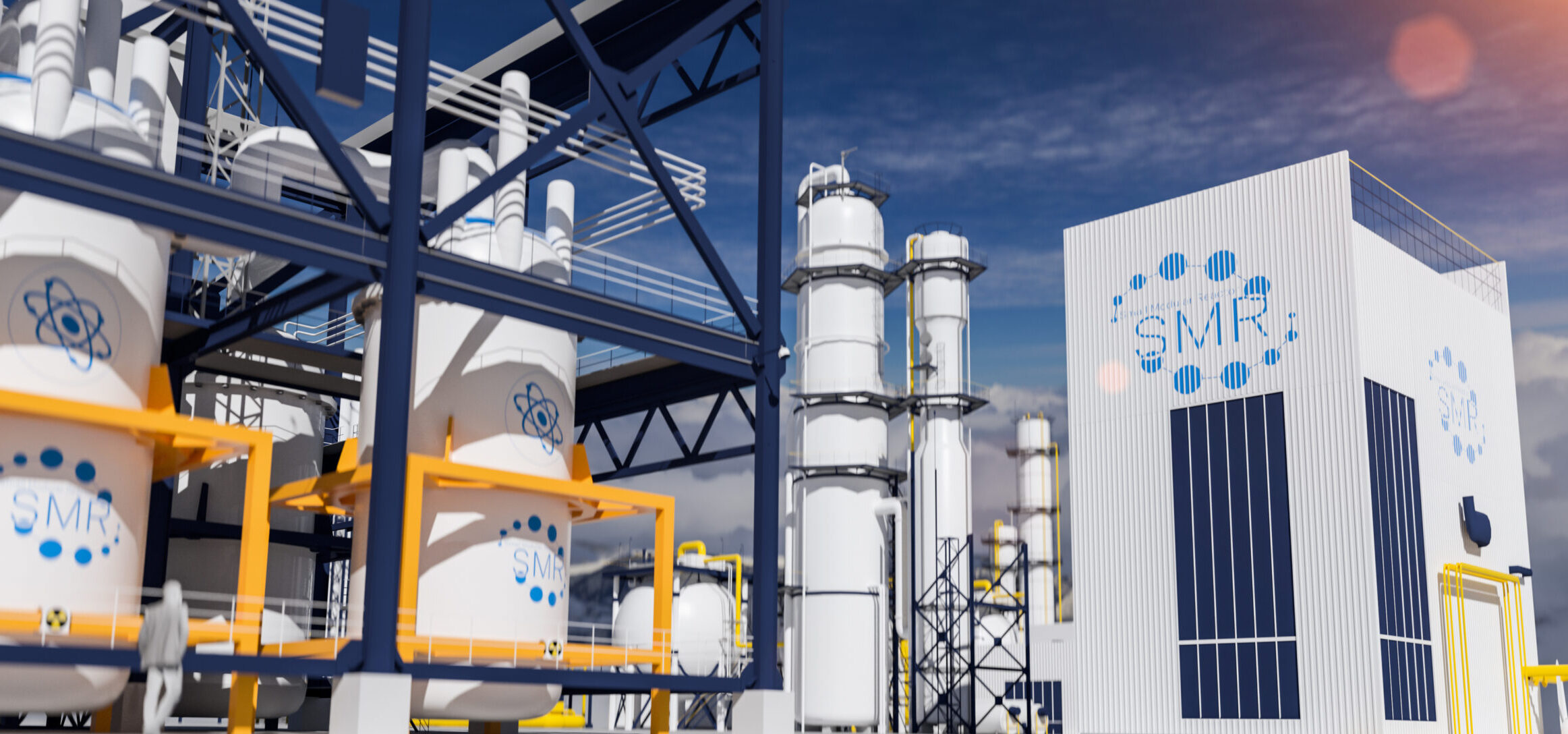
The State of Nuclear Energy in North America: Where the Industry Is Headed Next
Over the last decade, nuclear energy has moved from the sidelines back into serious policy, infrastructure, and economic conversations across North America.
Governments are revisiting long-term energy strategies, and utilities are reassessing grid reliability. Technology companies and large industrial operators are searching for stable, low-emissions power sources capable of supporting fast-growing demand.
What’s different this time around is that nuclear energy is no longer centred solely on large-scale reactors and distant megaprojects. Today, much of the momentum is being driven by growing interest in Small Modular Reactors (SMRs), energy security concerns, domestic supply chain resilience, and the realities of electrification across industries.
While challenges around regulation, cost, public trust, and deployment timelines remain very real, the direction of the industry is becoming increasingly difficult to ignore as countries work to build a dependable, diversified energy future.
Why Nuclear Energy Is Dominating the Conversation
For much of the early 2000s, the broader energy conversation in North America followed a relatively predictable trajectory. Natural gas expanded rapidly, and renewable technologies scaled quickly. Nuclear projects, meanwhile, were often viewed as politically difficult, expensive, and too slow-moving to compete.
Today, many of the assumptions that shaped that environment are changing.
Electricity demand is climbing again after years of relatively flat growth. Large-scale electrification, domestic manufacturing expansion, population growth, and the rapid rise of AI and data infrastructure are putting new pressure on grids across Canada, the United States, and the rest of the world. In many regions, utilities and governments are now confronting the reality: future energy systems will need to deliver not just low emissions, but dependable, large-scale power around the clock.
According to the International Energy Agency, electricity consumption is set to rise by a robust 3.3% in 2025 and 3.7% in 2026. While the latest forecasts for global electricity demand growth this year and next are a deceleration from the 4.4% surge recorded in 2024, they remain well above the 2015-2023 average.
Global electricity demand from data centres alone is expected to increase significantly over the next decade as AI adoption accelerates. At the same time, organizations like the U.S. Department of Energy and Natural Resources Canada have increasingly emphasized the importance of firm, reliable clean energy sources as countries work toward long-term decarbonization and energy security goals.
To clarify—nuclear energy is not being revisited because other technologies have failed, but because the scale and complexity of future energy demand is becoming harder to ignore. And increasingly, the conversation is no longer centred exclusively on traditional large-scale nuclear plants. Much of the momentum is now focused on how newer technologies—including Small Modular Reactors (SMRs)—could fit into a more flexible and diversified North American energy mix.
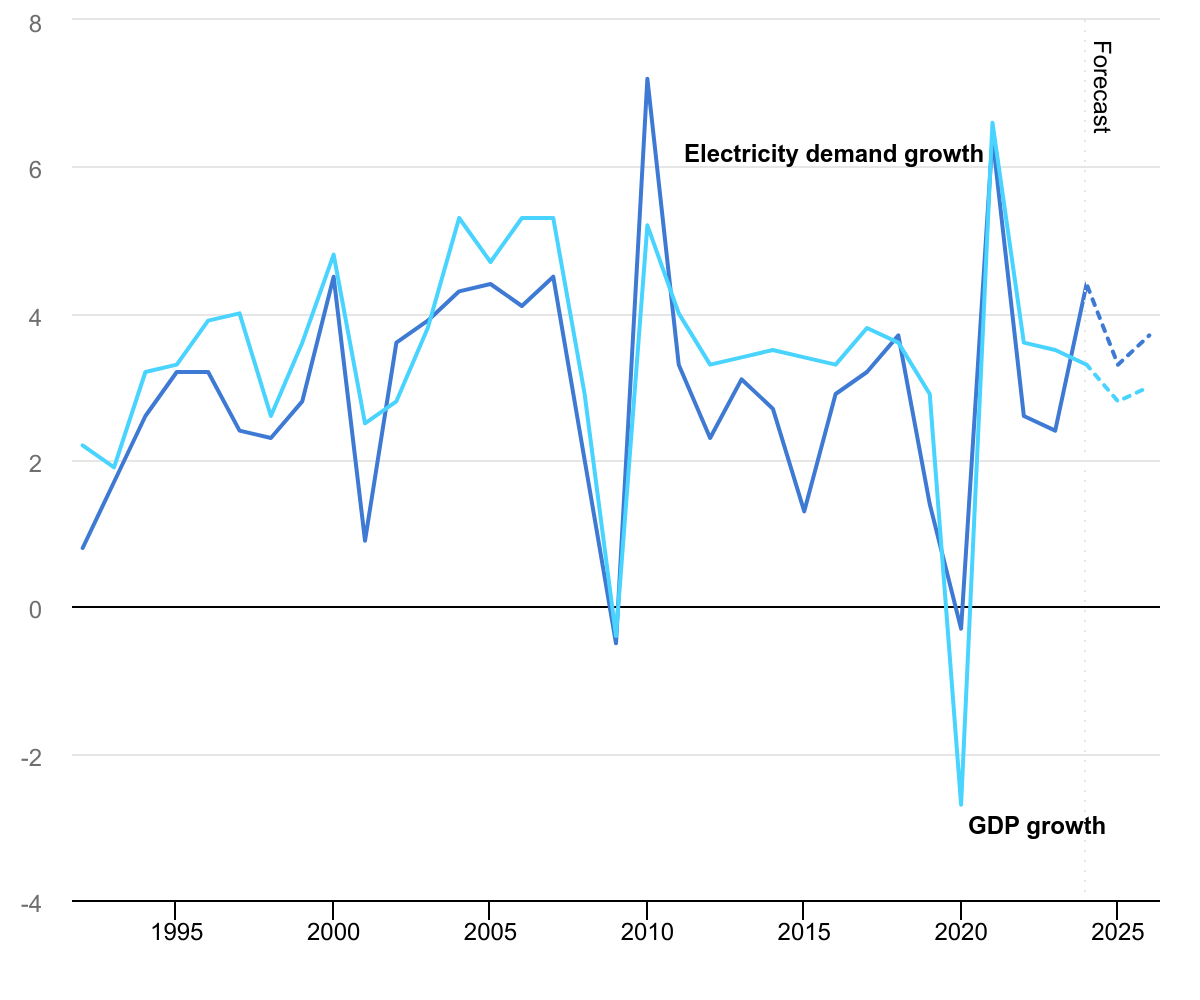
IEA (2025), Year-on-year percent change in global electricity demand, 1992-2026. Source: International Energy Agency.
Why Small Modular Reactors (SMRs) Are Driving Attention
Small Modular Reactors, or SMRs, have been at the centre of nuclear conversations lately. Unlike traditional nuclear facilities that are designed as massive, centralized infrastructure projects, SMRs are intended to be smaller, more flexible, and easier to deploy in a wider range of environments. While designs and applications vary, many SMR concepts are being developed with goals like reduced construction complexity, scalable deployment, improved safety systems, and the ability to support regions or industries that may not require large-scale conventional reactors.
That flexibility is a major reason governments, utilities, and private industry are paying attention.
Across North America, SMRs are increasingly being explored as a potential fit for:
- growing industrial power demand,
- remote and resource-based operations,
- grid stabilization,
- replacing retiring fossil fuel infrastructure,
- and supporting long-term decarbonization goals without sacrificing reliability.
But SMRs are still in the early stages of broader commercialization. Questions around licensing, financing, supply chains, workforce development, and deployment timelines remain central to the industry’s future. Despite that, the conversation has slowly shifted from whether SMRs are worth exploring to how they will fit into the energy mix.
Regions Leading Nuclear Energy in North America
While nuclear momentum is growing across North America broadly, a handful of regions are emerging as particularly important centres of activity.
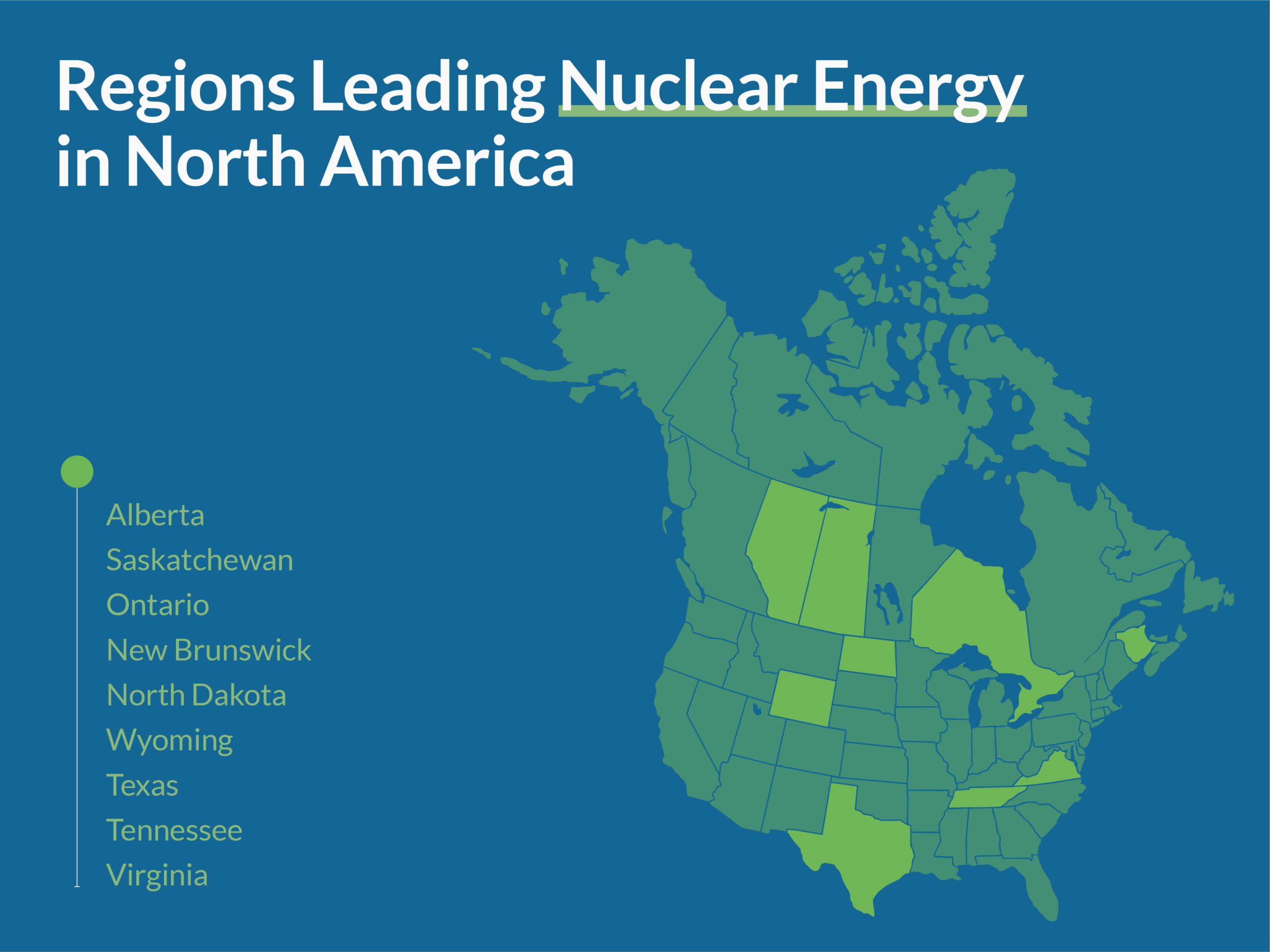
In Canada, much of the early SMR momentum has been concentrated in provinces with strong industrial economies, existing energy expertise, and increasing pressure to secure long-term reliable power. Ontario, for example, has positioned itself as one of the continent’s most active SMR development hubs, including plans around the Darlington New Nuclear Project.
Other provinces including Saskatchewan, Alberta, and New Brunswick have all participated in collaborative SMR development initiatives, reflecting growing national interest in the technology’s long-term potential. The Canadian government has also positioned SMRs as part of its broader clean energy and economic development strategy through initiatives like the Canadian SMR Roadmap and SMR Action Plan.
In the United States, momentum is also accelerating through federal investment, advanced reactor programs, utility partnerships, and growing private sector demand for reliable clean power—particularly as electricity-intensive industries continue expanding. Activity is accelerating across several states including Tennessee, Wyoming, Texas, North Dakota and Virginia, which have seen growing investment and policy support tied to advanced nuclear development, fuel supply chains, research initiatives, and next-generation reactor deployment.
Interest in nuclear energy is also expanding beyond traditional utility conversations. Large industrial operators, mining projects, remote communities, and energy-intensive sectors are beginning to evaluate where smaller-scale nuclear technologies could eventually support dependable power needs in regions where reliability, transmission limitations, or fuel logistics create ongoing challenges.
Technology companies and hyperscale data centre operators are also beginning to influence the conversation in new ways. As AI adoption accelerates, the demand for large-scale, reliable electricity is rising alongside it. For context: hyperscale AI centres can exceed 100 MW of electricity usage—equivalent to the annual electricity consumption of 100,000 households. Companies building massive data infrastructure are increasingly confronting the reality that future digital growth will require enormous amounts of stable power, which is a challenge that intermittent energy sources alone may struggle to fully address.
That dynamic is beginning to reshape how governments, utilities, and private industry think about long-term energy planning across North America.
What Still Needs to Happen Before Nuclear Scales
Despite the renewed momentum around nuclear energy and SMRs, the industry is still facing several hurdles before large-scale deployment becomes reality across North America.
One of the biggest challenges is time.
Nuclear infrastructure operates on longer development timelines than many other energy technologies, particularly when projects involve complex licensing processes, environmental assessments, supply chain coordination, and major capital investment. While interest in advanced nuclear has accelerated quickly, building the supporting ecosystem around it will take sustained collaboration between governments, regulators, utilities, private industry, and local communities.
Public trust will also play a major role in shaping the pace of future development.
Across North America, conversations around nuclear energy are becoming more nuanced than they were even a decade ago. Many communities still have understandable questions around safety, waste management, environmental stewardship, and long-term accountability. As the industry evolves, transparency and community engagement will remain essential to building confidence around future projects.
Workforce readiness is another emerging challenge.
Expanding nuclear capacity will require engineers, skilled trades, operators, researchers, manufacturers, and fuel supply expertise at a scale that North America is still working to rebuild after decades of relatively slow nuclear growth.
Still, many of the conditions driving renewed interest in nuclear energy are unlikely to disappear:
- electricity demand continues to rise;
- governments are searching for reliable pathways toward lower-emissions energy systems;
- industries requiring continuous, high-volume power are growing;
- concerns around long-term energy security are increasingly shaping national infrastructure discussions.
For that reason, the conversation around nuclear energy is no longer centred only on whether the industry will evolve but how quickly North America can realistically build the systems, partnerships, and regulatory frameworks required to support it responsibly.
A New Chapter in North America’s Energy Future
It’s clear that North America’s energy landscape needs to evolve, and the scale of what comes next will require more than a single technology or solution. Meeting future demand while balancing reliability, affordability, emissions reduction, and energy security will depend on long-term collaboration between governments, regulators, utilities, industry, researchers, and local communities.
As momentum around SMRs, fuel innovation, and advanced nuclear development continues to grow across Canada and the United States, the next chapter of nuclear energy in North America will ultimately be shaped by how effectively organizations work together to move the industry forward responsibly.
Related Reading: